Selecting the right Compression Testing Machine is an important decision for laboratories, construction companies, RMC plants, educational institutions, and quality control departments. One of the most common questions buyers face is whether to invest in a Manual Compression Testing Machine or an Automatic Compression Testing Machine. While both machines are designed to determine the compressive strength of materials such as concrete, cement, mortar, bricks, and blocks, they differ significantly in terms of operation, accuracy, efficiency, and user convenience.
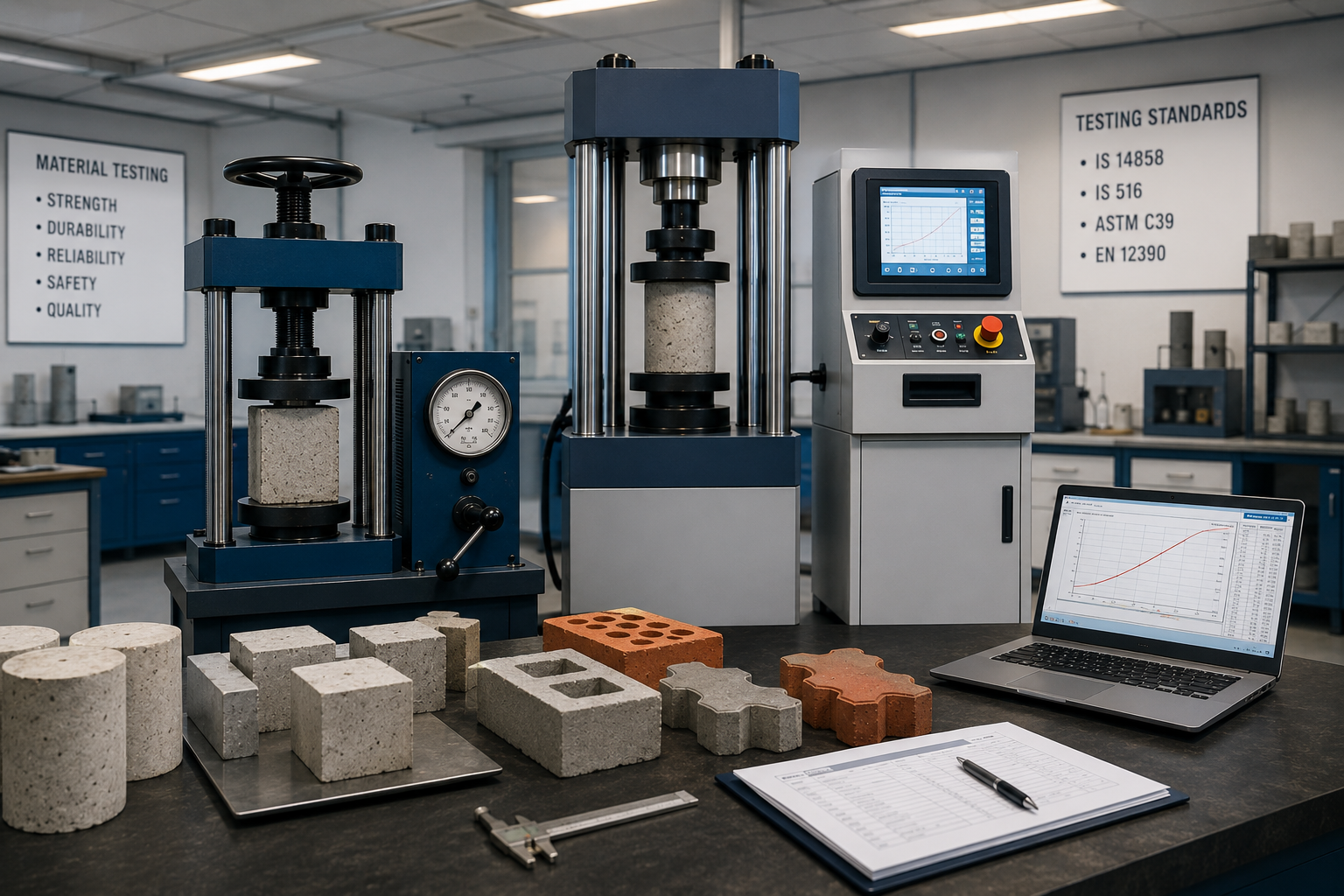
A Manual Compression Testing Machine requires the operator to control the loading process manually during testing. The user applies load to the specimen while monitoring the testing procedure and recording the results. These machines are generally preferred by smaller laboratories, educational institutions, and organizations with lower testing volumes. They offer a cost-effective solution for basic compression testing requirements and are often selected when budget considerations are a primary concern.
In contrast, an Automatic Compression Testing Machine automates the loading process and provides precise control over testing parameters. The machine applies load at a predefined rate, records test data automatically, and captures the maximum load achieved by the specimen without requiring constant operator intervention. This results in greater consistency, improved repeatability, and reduced chances of human error. Automatic systems are widely used in commercial laboratories, infrastructure projects, RMC plants, cement industries, and research facilities where testing accuracy and productivity are critical.
One of the key advantages of Automatic Compression Testing Machines is their ability to maintain a consistent loading rate throughout the testing process. This feature helps ensure compliance with industry standards such as IS 14858, IS 516, ASTM C39, and EN 12390. Since the testing procedure is controlled electronically, results are more reliable and less dependent on operator skill or experience. Manual machines, while capable of producing accurate results when operated correctly, may be influenced by variations in loading speed and operator technique.
Productivity is another important consideration when comparing manual and automatic systems. Laboratories that perform a large number of tests daily often benefit from automatic machines because they reduce testing time and simplify data collection. Automatic systems can generate detailed reports, store test results, and integrate with software platforms, making them particularly valuable in modern quality control environments. Manual machines typically require more operator involvement and additional effort for record keeping and reporting.
Maintenance and operational complexity also differ between the two options. Manual Compression Testing Machines are generally simpler in design, making them easier to operate and maintain. Automatic machines incorporate advanced electronics, digital controllers, sensors, and software systems, which may require periodic calibration and technical support. However, the additional functionality and efficiency often justify the investment for organizations with demanding testing requirements.
The choice between a manual and automatic Compression Testing Machine ultimately depends on the testing volume, accuracy requirements, budget, and long-term operational goals of the organization. Educational institutions and smaller laboratories with occasional testing needs may find manual systems sufficient for their applications. On the other hand, organizations that require frequent testing, detailed documentation, standards compliance, and high levels of accuracy often benefit significantly from automatic systems.
As quality requirements continue to increase across the construction and materials testing industry, many organizations are transitioning toward automated testing solutions to improve efficiency and consistency. Automatic Compression Testing Machines provide a modern approach to material testing while helping laboratories maintain compliance with industry standards and deliver dependable results.
Both manual and automatic Compression Testing Machines serve important roles in construction material testing. Understanding the differences between the two systems allows buyers to make informed decisions based on their specific operational needs and testing objectives. By selecting the right machine, organizations can improve testing reliability, enhance productivity, and ensure confidence in the quality of the materials they evaluate.