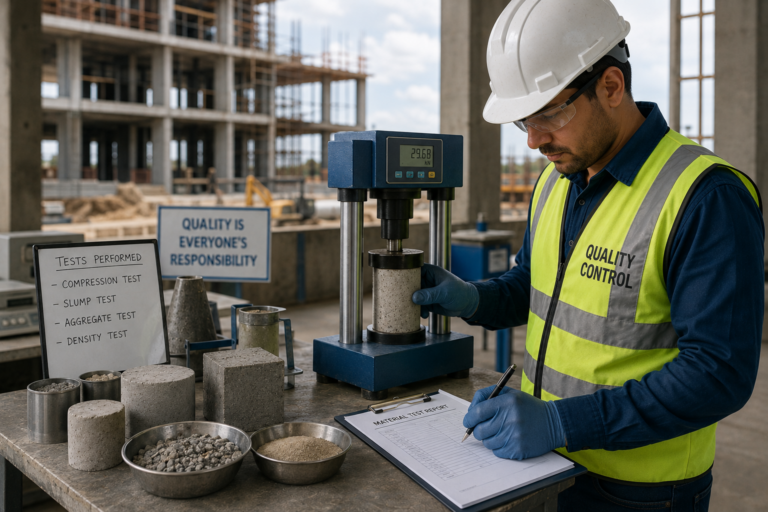
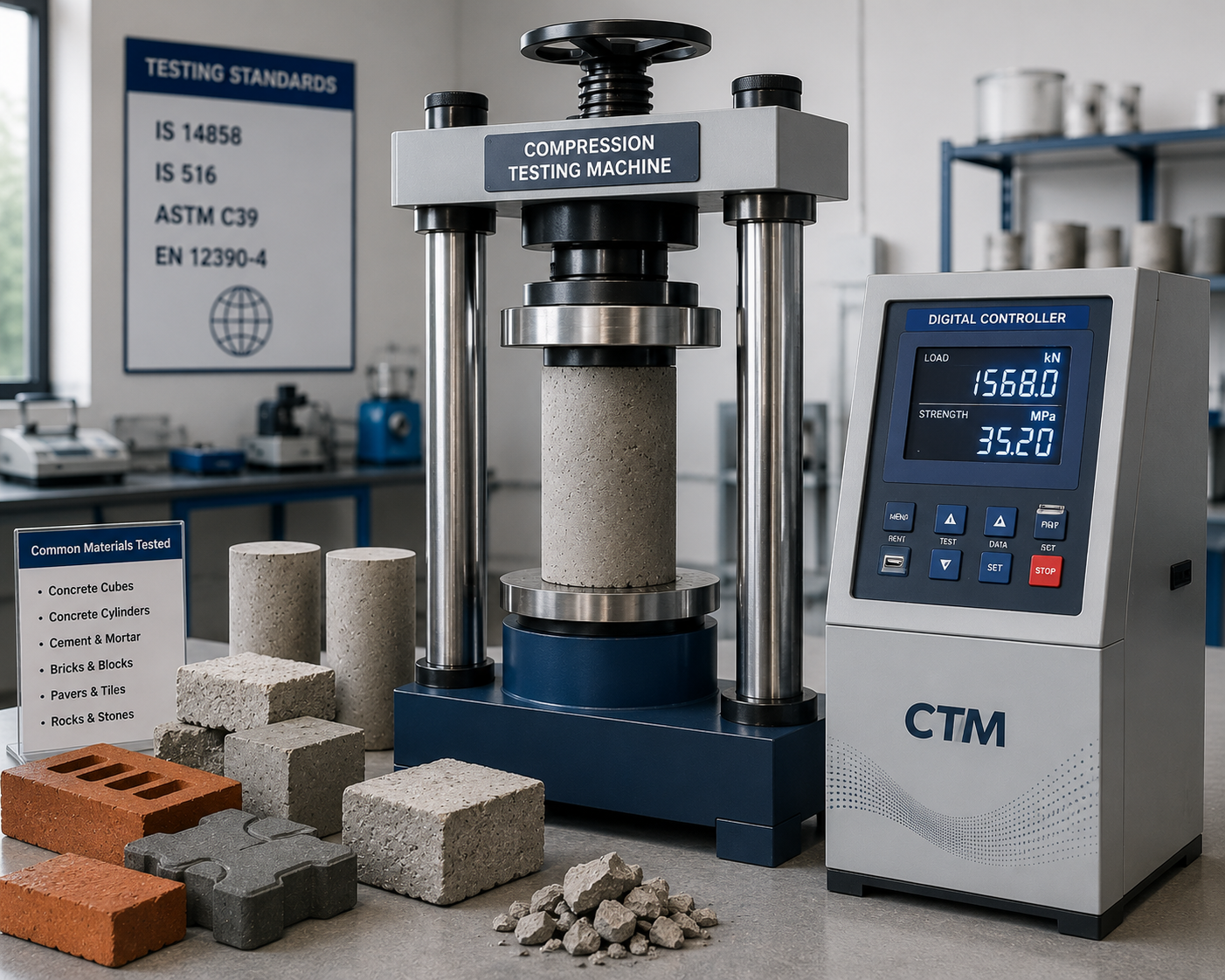
A Compression Testing Machine (CTM) is a specialized testing equipment used to determine the compressive strength of materials such as concrete, cement, mortar, bricks, pavers, blocks, rocks, and other construction materials. It plays a critical role in quality control and material testing by applying a controlled compressive load to a specimen until failure occurs. The maximum load sustained by the specimen is recorded and used to calculate its compressive strength, helping engineers, laboratories, contractors, and manufacturers verify whether materials meet the required standards and performance criteria.
Compression Testing Machines are widely used in construction laboratories, ready-mix concrete (RMC) plants, cement manufacturing facilities, educational institutions, research organizations, infrastructure projects, government testing laboratories, and quality control departments. These machines help ensure that construction materials possess the required strength to withstand structural loads and environmental conditions throughout their service life.
Modern Compression Testing Machines are available in manual, digital, automatic, and servo-controlled configurations with capacities ranging from small laboratory models to high-capacity systems capable of testing heavy-duty concrete and construction materials. Advanced machines are equipped with digital controllers, data acquisition systems, automated loading mechanisms, and software integration for accurate and repeatable test results.
The testing process typically involves placing a prepared specimen, such as a concrete cube or cylinder, between the compression platens of the machine. A compressive force is then applied at a specified rate until the specimen fails. The machine records the peak load, which is used to calculate the compressive strength of the material. This information helps determine whether the material complies with relevant standards and project specifications.
Compression Testing Machines are designed to comply with various national and international testing standards, including IS 14858, IS 516, ASTM C39, and EN 12390-4. Compliance with these standards ensures accurate, reliable, and standardized testing procedures across different laboratories and industries.
Selecting the right Compression Testing Machine depends on several factors, including the type of material being tested, specimen size, testing frequency, required level of automation, and applicable testing standards. Laboratories handling high testing volumes often prefer automatic or servo-controlled systems, while smaller facilities may choose digital or manual models based on operational requirements and budget considerations.
As construction quality requirements continue to become more stringent, Compression Testing Machines remain one of the most important tools for material testing and quality assurance. By providing accurate measurements of compressive strength, these machines help ensure the safety, durability, and reliability of buildings, roads, bridges, dams, and other critical infrastructure projects.
Whether used for routine quality control, research applications, educational purposes, or compliance testing, a Compression Testing Machine is an essential investment for organizations involved in construction material testing and quality assurance. Proper testing not only helps meet industry standards but also contributes to safer structures, improved product quality, and long-term project success.