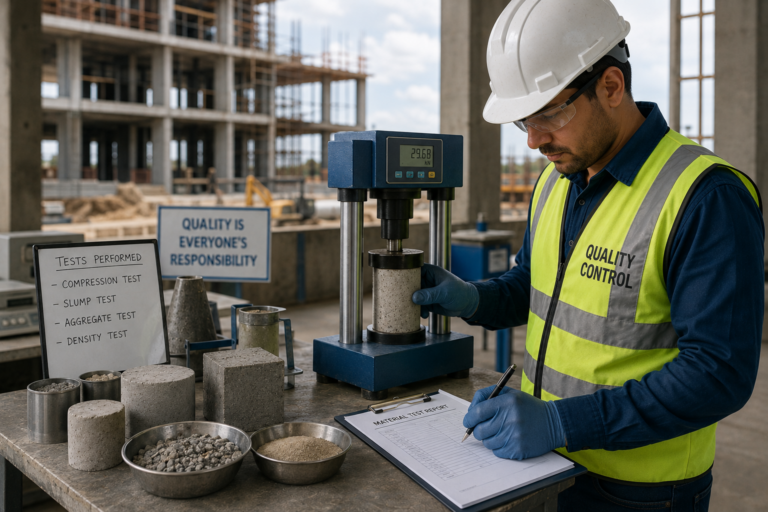
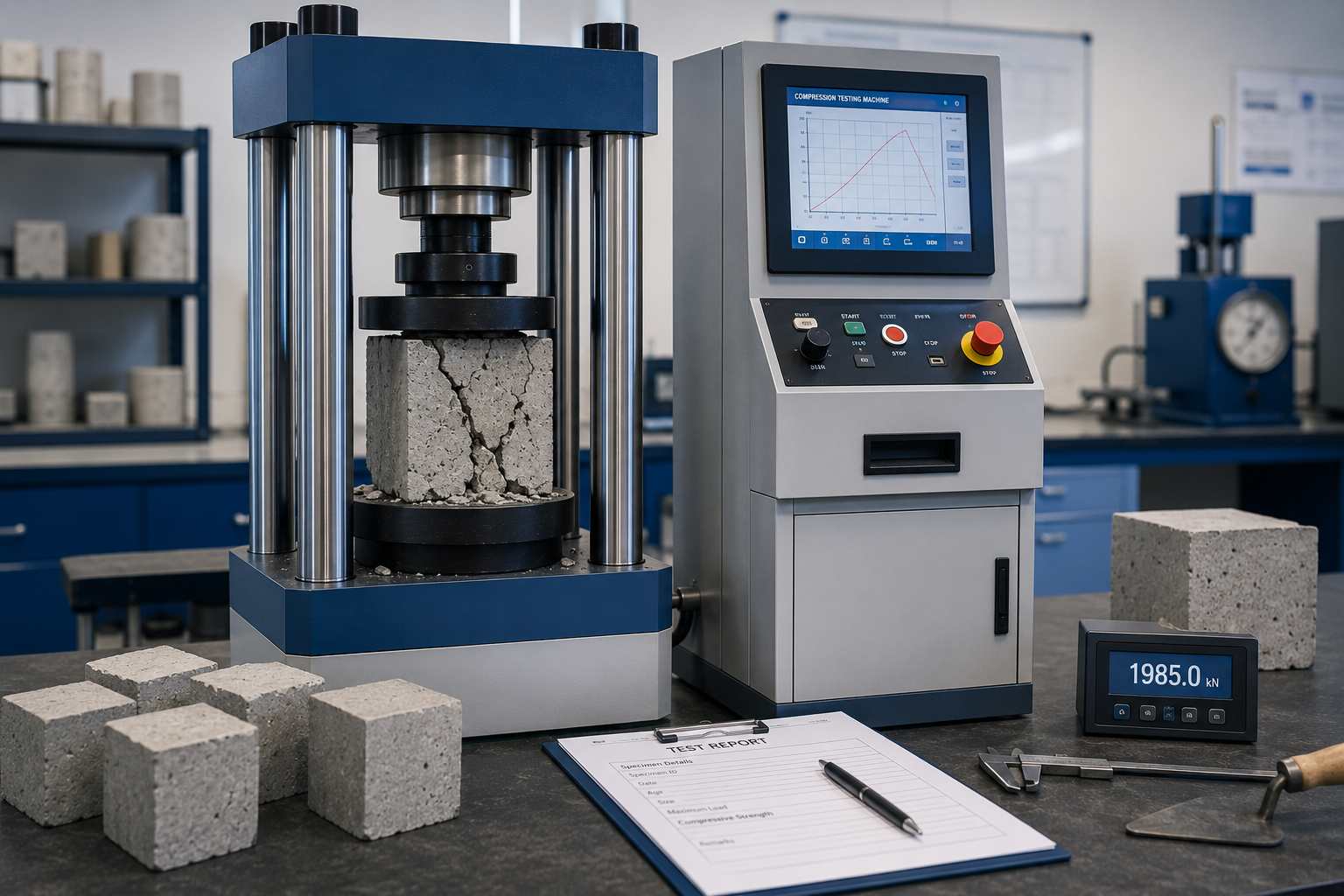
Concrete cube strength testing is one of the most important quality control procedures used in the construction industry. It helps determine whether the concrete used in a project has achieved the required compressive strength and meets the specified design requirements. The test is performed using a Compression Testing Machine (CTM), which applies a controlled compressive load to a concrete cube until failure occurs. The results obtained from this test provide valuable information about the quality, durability, and structural performance of concrete.
The testing process begins with the preparation of concrete cube specimens. Fresh concrete is poured into standard cube molds, typically measuring 150 mm × 150 mm × 150 mm, and compacted properly to eliminate air voids. After casting, the specimens are kept in a controlled environment for the initial curing period before being removed from the molds and submerged in water for curing. The cubes are generally tested after 7 days and 28 days, depending on project requirements and applicable standards.
Before testing, the concrete cube is removed from the curing tank and allowed to drain excess water. The dimensions and condition of the specimen are checked to ensure it is suitable for testing. The cube is then placed centrally between the upper and lower platens of the Compression Testing Machine. Proper alignment is essential because uneven loading may affect the accuracy of the results.
Once the specimen is correctly positioned, the Compression Testing Machine applies a compressive load at a specified and controlled rate. The load gradually increases until the concrete cube fails or cracks under pressure. During the test, the machine continuously records the applied load and automatically captures the maximum load sustained by the specimen before failure. This peak load value is used to calculate the compressive strength of the concrete.
The compressive strength is determined by dividing the maximum load by the cross-sectional area of the cube. The resulting value indicates the concrete’s ability to withstand compressive forces and is usually expressed in megapascals (MPa) or Newtons per square millimeter (N/mm²). The measured strength is then compared with the specified design strength to verify compliance with project and quality standards.
Compression testing of concrete cubes is widely performed in construction projects, ready-mix concrete plants, testing laboratories, infrastructure developments, and quality control departments. It serves as a reliable method for evaluating concrete performance and identifying potential issues related to material quality, mix design, curing conditions, or construction practices. Regular testing helps ensure that structures such as buildings, bridges, roads, dams, and industrial facilities are built using concrete that meets the required strength specifications.
For accurate and reliable results, testing should be conducted using a properly calibrated Compression Testing Machine that complies with recognized standards such as IS 516, IS 14858, ASTM C39, and EN 12390. Proper specimen preparation, curing, handling, and testing procedures are equally important in obtaining dependable test results.
Concrete cube strength testing remains one of the most trusted and widely accepted methods for assessing concrete quality. By verifying the compressive strength of concrete before and during construction, engineers and quality control professionals can ensure structural safety, maintain compliance with industry standards, and achieve long-term durability in construction projects. A well-maintained Compression Testing Machine, combined with correct testing procedures, plays a vital role in delivering accurate results and maintaining confidence in the quality of concrete used in modern infrastructure development.