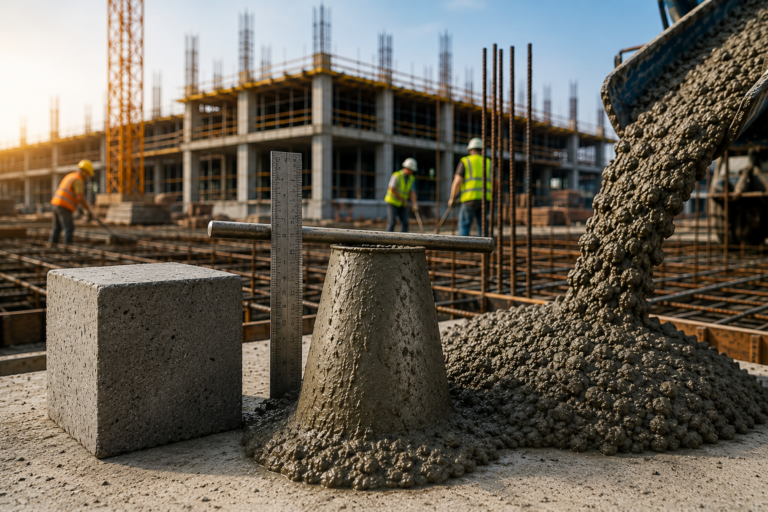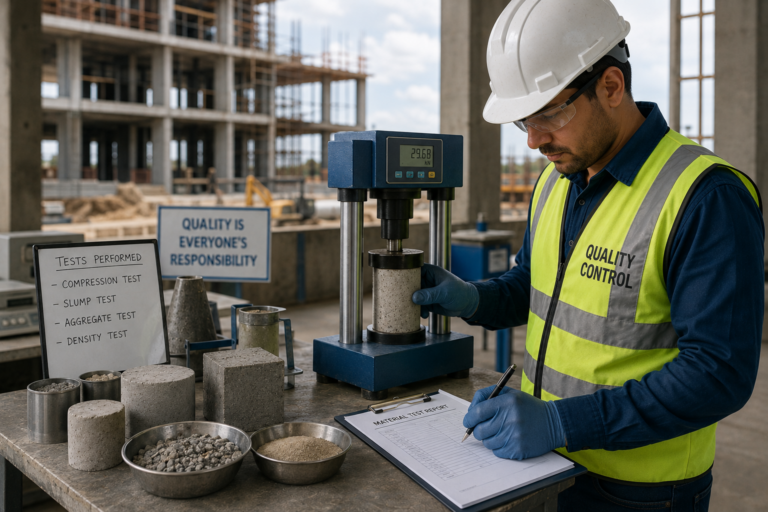
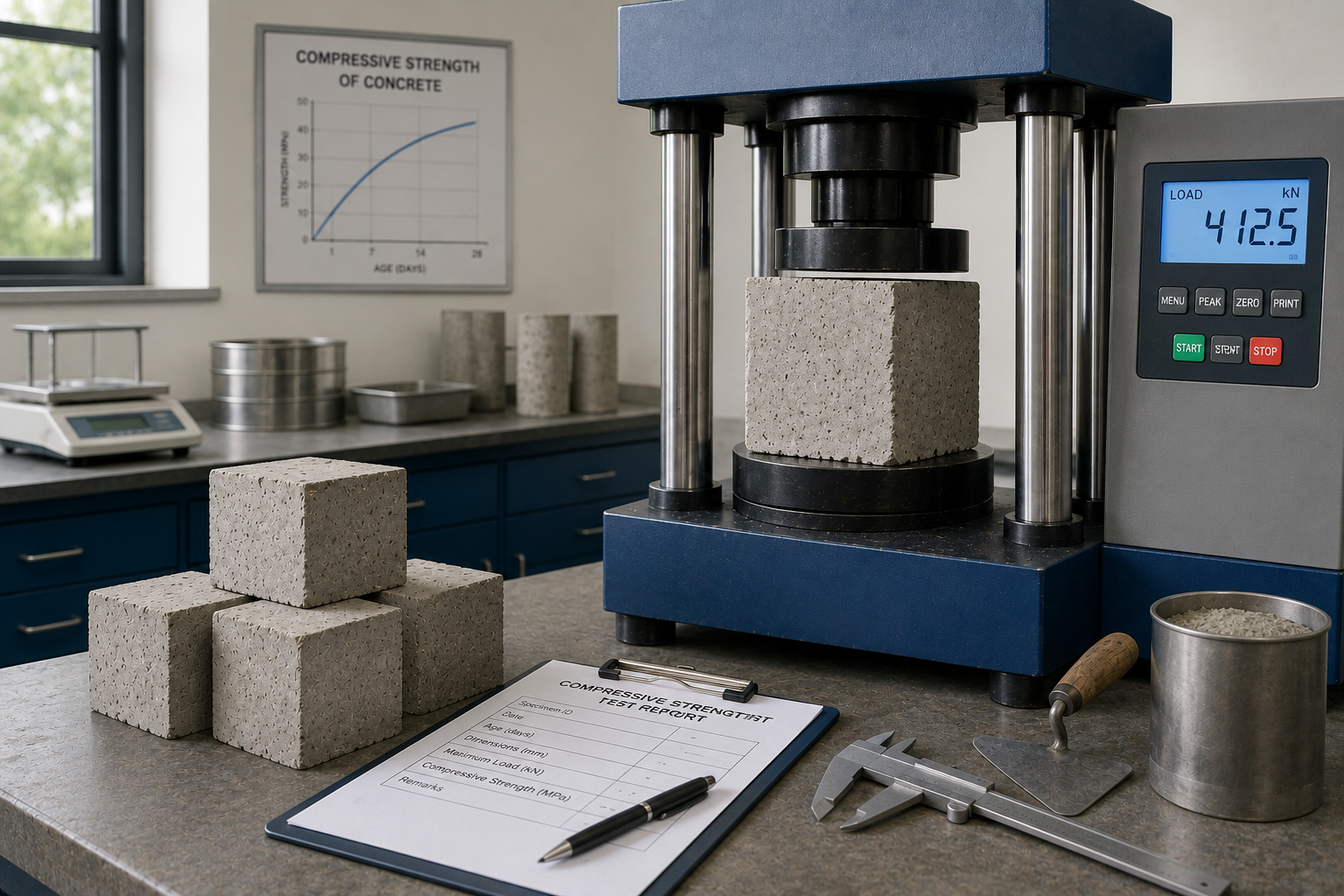
Compressive strength is one of the most important properties of concrete and serves as a key indicator of its quality, durability, and structural performance. It represents the ability of concrete to resist compressive loads without failure and is widely used by engineers, contractors, quality control professionals, and testing laboratories to evaluate whether concrete is suitable for a particular application. Since concrete is primarily designed to withstand compression, understanding its compressive strength is essential for ensuring safe and reliable construction.
The compressive strength of concrete is influenced by several factors, including the quality of raw materials, water-cement ratio, mix design, curing conditions, compaction methods, and age of the concrete. Even small variations in these factors can significantly affect the final strength achieved by the material. For this reason, construction projects rely heavily on testing procedures to verify that concrete meets specified design requirements before it is used in critical structural elements.
Concrete gains strength gradually over time as the cement hydration process continues. Although strength development begins soon after placement, concrete does not achieve its full strength immediately. Testing is commonly performed at different ages to evaluate strength progression and ensure that the material is developing as expected. These test results help engineers assess construction quality and determine whether structural work can proceed safely.
Compressive strength testing plays a crucial role in quality assurance programs across the construction industry. By measuring the actual strength of concrete specimens, organizations can verify compliance with project specifications, building codes, and industry standards. This testing process helps identify potential issues related to mix design, material quality, curing practices, or construction methods before they impact the completed structure.
The significance of compressive strength extends beyond simple quality control. Structural engineers use strength values when designing foundations, columns, beams, slabs, bridges, pavements, retaining walls, and other load-bearing elements. The strength of concrete directly influences the load-carrying capacity of these structures and affects overall safety, durability, and long-term performance. Reliable strength data allows engineers to make informed decisions during both design and construction phases.
Several factors contribute to achieving high compressive strength in concrete. Proper mix proportioning ensures that the correct balance of cement, aggregates, water, and admixtures is maintained. Adequate compaction removes air voids and improves density, while proper curing helps maintain the moisture necessary for continued strength development. Consistent quality control throughout the production and placement process is essential for achieving predictable and reliable results.
Environmental conditions can also influence concrete strength. Temperature, humidity, and exposure conditions affect hydration and curing processes, which in turn impact strength development. Construction teams must consider these factors carefully to ensure that concrete performs as intended under varying site conditions. Proper curing practices remain one of the most effective methods for maximizing strength and improving long-term durability.
In modern construction, compressive strength testing is widely performed by testing laboratories, ready-mix concrete plants, infrastructure contractors, educational institutions, and research organizations. The data generated from these tests provides valuable information for quality assurance, project documentation, regulatory compliance, and engineering analysis. Accurate strength measurement helps reduce risk and supports the successful completion of construction projects.
As construction technologies continue to evolve, the importance of compressive strength remains unchanged. Whether used for residential buildings, commercial developments, industrial facilities, highways, bridges, or large-scale infrastructure projects, concrete must demonstrate sufficient strength to perform safely and effectively throughout its service life. Reliable testing procedures and proper quality control practices help ensure that this objective is achieved.
Understanding compressive strength is fundamental for anyone involved in construction, material testing, or quality assurance. It provides a clear measure of concrete performance and serves as a foundation for engineering decisions that affect safety, reliability, and structural integrity. By maintaining proper production, curing, and testing practices, organizations can ensure that concrete consistently meets the demands of modern construction projects.